
History
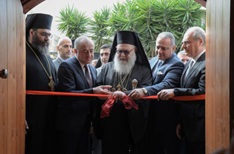
The museum of the Monastery of Our Lady of Balamand was officially inaugurated on December 17, 2024 by His Beatitude John X, Patriarch of Antioch and all the East, the Monastery Superior, Archimandrite Father George Yaacoub, the Minister of Culture, Judge Mohammad Al Mortada, and the President of the University of Balamand, Dr. Elias Warrak.
Its creation, long dreamed of, represents a major breakthrough in the history of the Monastery. This achievement was made possible through the will of the monastery Superior, the support of the Patriarch, and the spearheading and persevering efforts of the Department of Archaeology and Museology of the University of Balamand, along with the hard work of a team of professionals and volunteers. Additionally, since January 2025, it has proudly joined the prestigious International Council of Museums.
The museum is nestled inside one of the medieval large rooms of the monastery, situated at its southwestern angle, which was originally well defended thanks to its windows in the shape of arrowslits.
The newborn museum will soon expand in the adjoining hall, as the monastery’s collection is indeed very rich. Work is underway to enlarge the initial selection, allowing new items to rub shoulders with the first ones. Museum educational activities are customized for different audiences, mainly for school groups and families.
Logos Museum: one of them

The collection
At present, only a portion of the monastery’s collection is on display. It showcases a curated selection of 62 highlights, representing the two major periods of the site’s history: the medieval and the Ottoman. The collection explores a diverse range of themes, reflected in artefacts made from ceramics, metal, parchment, textile, and stone. These are:
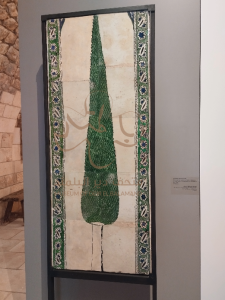
-Our Lady of Balamand Monastery Exhibition: A Stepping Stone into the Museum: a remarkable panel of Damascus glazed tiles depicting a cypress tree, recalling the tree that stands in the cloister.
-A Hill and its Surroundings Inhabited since Antiquity: Archaeological flint tools and pottery fragments from Prehistory to present time, displayed on a timeline.
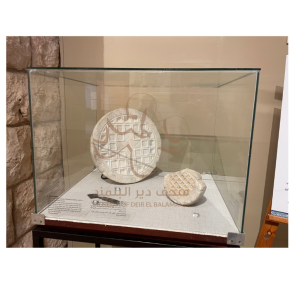
-The Early Byzantine Settlement (5th -6th centuries): Very rare stone circular bread stamps with Greek inscriptions of Byzantine tradition, most likely from the medieval or Ottoman period.
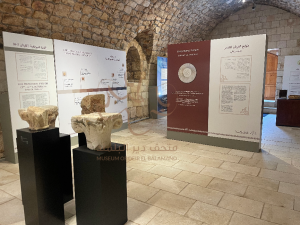
-The Crusader Period (12th-13th centuries): The era of Cistercian monks: Ornate architectural elements from the original monastery, such as capitals and corbels from both the Romanesque and Gothic styles.
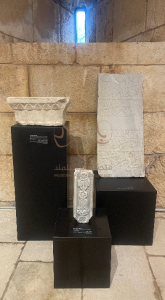
-The Ottoman Period: Orthodox Legacy (17th-20th centuries): Stone funerary and decorative stone elements such as epitaphs, corbels, and engraved geometric medallions.
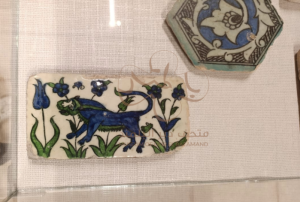
-The Art of Tilemaking: A Damascene Tradition: Exquisite glazed and painted tiles decorated with greenery and animals.
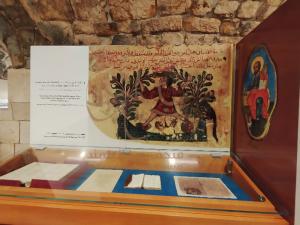
– Manuscripts: The Power of Words: A copy of the 13th century novel of Barlaam and Joasaph, another one of the foundation act of the monastery of 1603, and a Menaion from the 18th century.
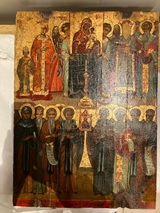
-The Icons: “Windows into Heaven”: Valuable icons representing holy figures and scenes.
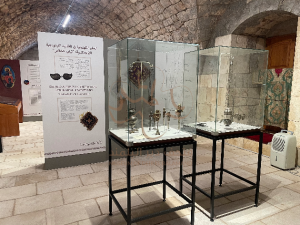
-Prayers and Devotion: Liturgical Objects: Finely decorated crosses, chalices, patens and their covers, communion spoons, incense burners, oil lamps, and belt buckles.
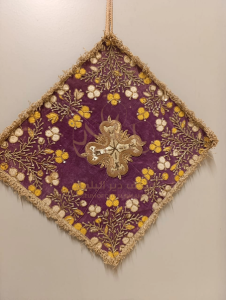
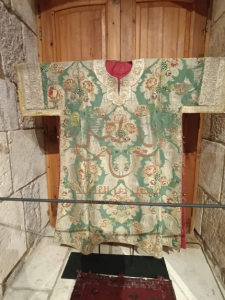
-Sacred Attires in Orthodox Liturgical Traditions: “Vestments of Salvation”: Delicate embroidered sakkos and epigonations.
– Patriarch Gregory IV of Antioch: A Legacy of Faith and Philanthropy: Personal items belonging to the Patriarch, namely his portrait, his koukoulion, his staff, and his rosary, showcased alongside the old episcopal throne of St. George church.
Exhibitions
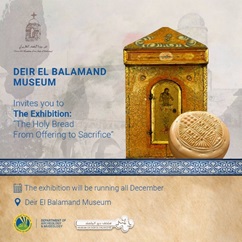
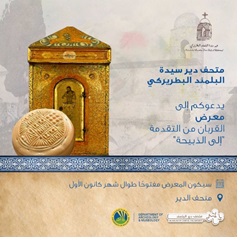
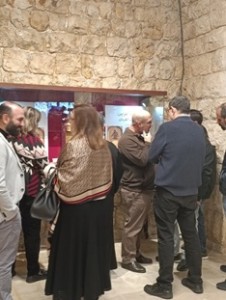
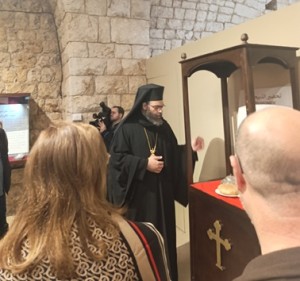
On December 12, 2024, Deir el Balamand Museum and the Department of Archaeology and Museology (DAM) at the University of Balamand (UOB), inaugurated an exhibition titled “The Holy Bread from Offering to Sacrifice” at the Deir Museum.
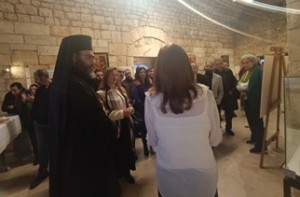
Oikonomos of the Lady of Balamand Monastery Archimandrite George Yaacoub, along with the Director of DAM, Dr. Patricia Antaki and her team, welcomed UOB deans, professors, staff, and notable guests to the opening event.
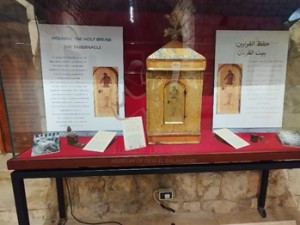
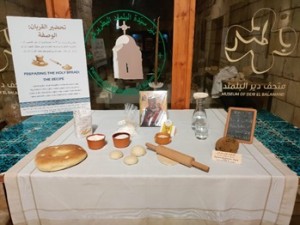
The exhibition showcases the origins and process of preparing the Holy Bread, beginning with the Mystical Supper and progressing to the recipe for the Holy Bread. It also provides a detailed explanation of the history and reasons behind the use of the Holy Bread marking, or the stamp of the Holy Bread, which began as a tradition in the Byzantine period and continues until today. Additionally, the exhibition covers the role of the stamp in preparing the Holy Bread for the Holy Communion.
The exhibition also explains the Proskomide process, performed during Matins on the altar located to the left of the Holy Altar Table, where the priest cuts the Prosphora using a Lance. It further explores the housing of the Holy Bread in the Tabernacle on the Altar inside the sanctuary, where the Holy Body and Blood of Christ, sanctified on Holy Thursday, are preserved inside the Tabernacle, for communion of faithful in special cases such as baptisms or sickness.
Events
* The inauguration
https://www.charqouna.com/deir-el-balamand-museum-inauguration/briefings/
copyright :
The monastery of Our Lady of Balamand inaugurated the Deir El Balamand Museum on December 17, 2023, in the presence of His Beatitude John X Patriarch of Antioch and all the East, the minister of culture in Lebanon, H.E. Mohammad Mortada, Deputy Prime Minister of Lebanon, Saadeh Al Shami, Deputy Speaker of the Parliament of Lebanon, H.E. Elias Bou Saab, the Abbot of the Monastery of Our Lady of Balamand, Archimandrite Father George Yaacoub, President of the University of Balamand, Dr. Elias Warrak as well as a number of religious, political and social figures.
* School tours and workshops
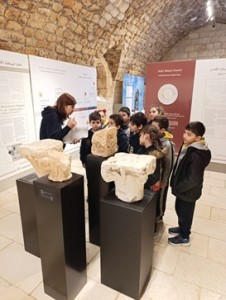
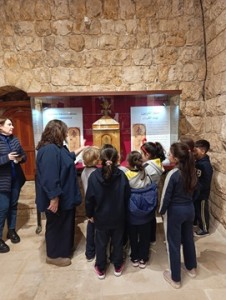
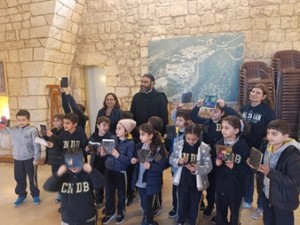
* International Museum Day 2025
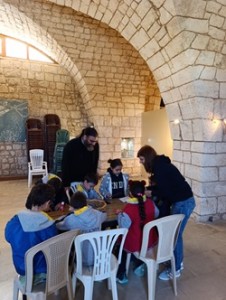
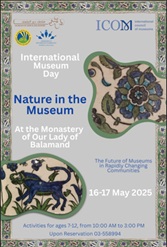
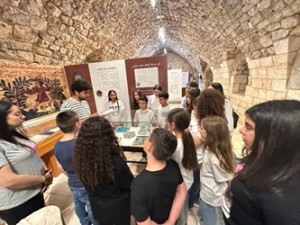
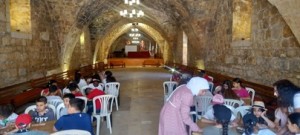
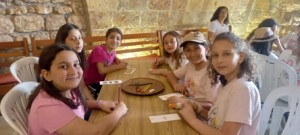
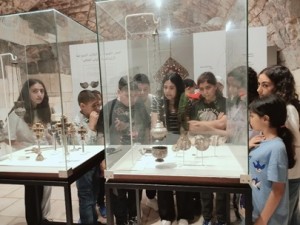
During IMD 2025, Students took part in a tour of the monastery, where they explored how nature is depicted through plants and animals in the architectural decorations and on the iconostasis of the Our Lady church. They also examined objects in the monastery and museum to understand how nature is reflected in art and craftsmanship. Inspired by what they observed, students created their own bookmarks featuring nature-themed designs.
Poster and some pics
Publications
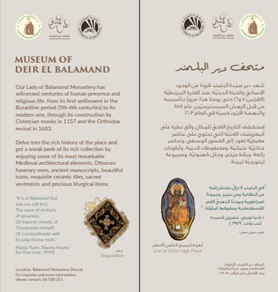
*The brochure
*Articles
-Homsy-Gottwalles, G. (2010). Note sur les céramiques du couvent Notre-Dame de Balamand. BAAL, 14, 413-435.
– ابراهيم، الأب ح. ( ٢٠١٨). مجموعة مخطوطات البلمند. في ن. بنايوت هارون (إشراف)، دير سيدة البلمند البطريركي: آثار، تاريخ وتراث مادي. (ص. 245-274). منشورات جامعة البلمند.
– الحمصي غوتفالس، غ. ( ٢٠١٨). دير سيدة البلمند، الكنوز الكنسيّة. في ن. بنايوت هارون (إشراف)، (ص. 277-288). منشورات جامعة البلمند.
– الحمصي غوتفالس، غ. و عيد سلامة ف. ( ٢٠١٨). مجموعة البلاط الجداريّ في دير البلمند. في ن. بنايوت هارون (إشراف)، (ص. 309-323). منشورات جامعة البلمند.
– الزيباوي، م. ( ٢٠١٨). أيقونات البلمند. في ن. بنايوت هارون (إشراف)، (ص. 227-242). منشورات جامعة البلمند.
– بنايوت هارون، ن. ( ٢٠١٨). التراث الثقافيّ الماديّ لدير سيّدة البلمند البطريركيّ. في ن. بنايوت هارون (إشراف)، (ص. 213-225). منشورات جامعة البلمند.
– سليم، س. ( ٢٠١٨ ). الحُلل الكهنوتيّة في البلمند. في ن. بنايوت هارون (إشراف)، (ص. 291-307). منشورات جامعة البلمند.
Souvenirs
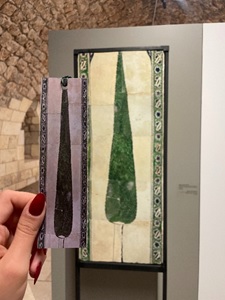
A bookmark inspired by the stunning 17th-century Damascus Ceramic Tile Panel, featuring a majestic cypress tree. A timeless piece of art in the palm of your hands!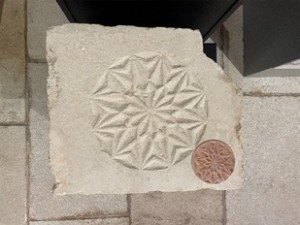
Coasters inspired by the intricate Ottoman decorative medallions found throughout the monastery. A touch of history for your table!
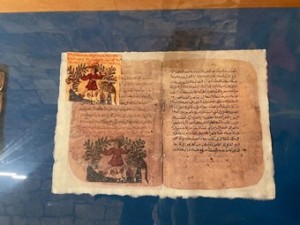
A magnet inspired by the beautiful illumination of The Legend of the Unicorn from the 12th-century Manuscript of Barlaam and Joasaph. A piece of medieval artistry for you to enjoy!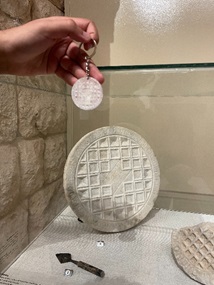
A key ring inspired by a medieval Holy Bread stamp, featuring compelling Greek inscriptions. A unique historical charm to carry with you!